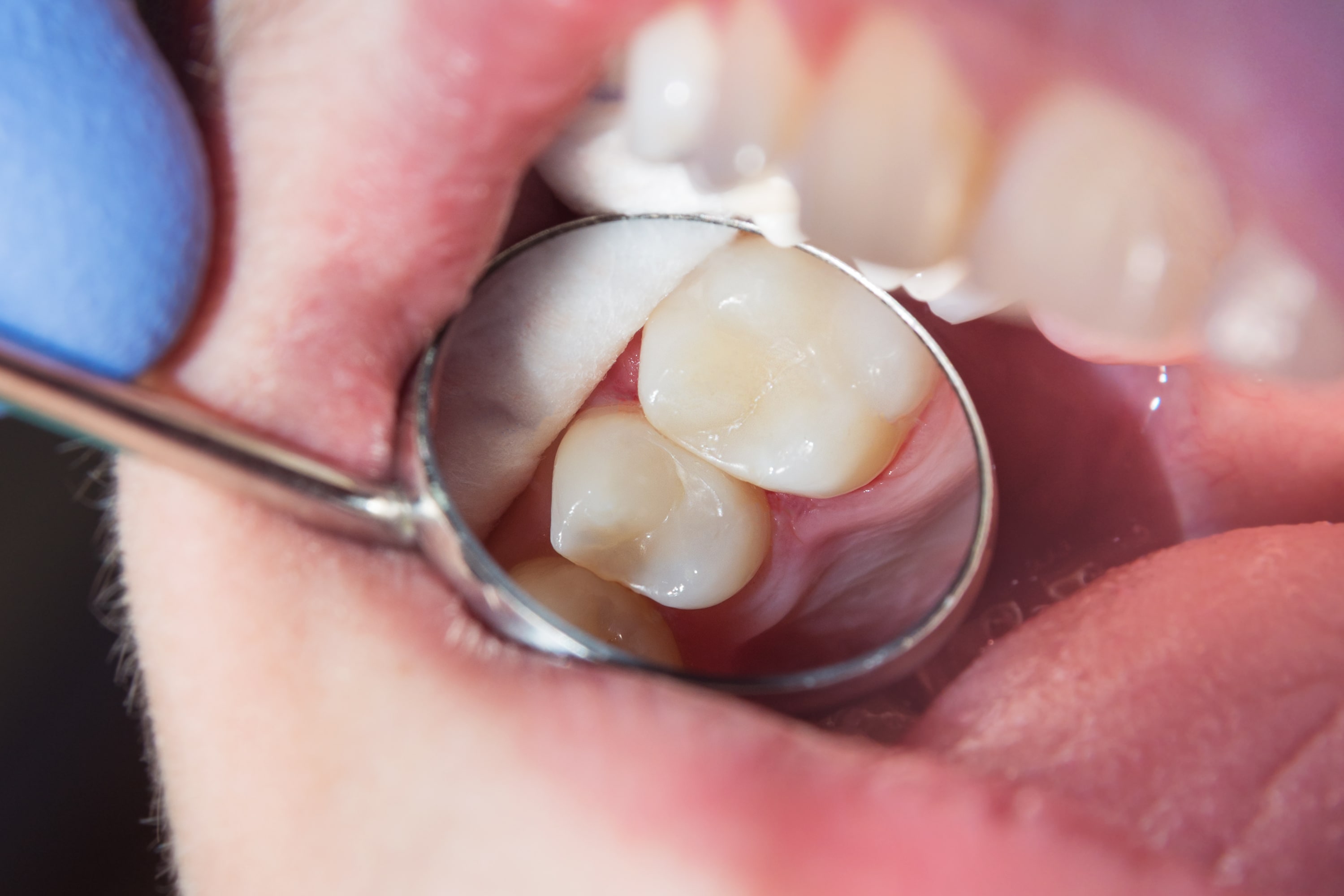
A dental crown fully covers and protects a damaged or weakened tooth, restoring its strength, function, and appearance. At Smile Story, crowns are custom-fabricated from a precise digital scan — no goopy impressions — and completed in two appointments over two weeks.
A dental crown is a custom-made restoration that fits over the entire visible portion of a tooth — from the gumline up. It fully encases the tooth, restoring its shape, strength, and appearance when the underlying structure has been compromised to the point that a filling alone won't hold.
Crowns are one of the most versatile restorations in dentistry. They protect teeth that have been weakened by decay, fracture, or wear; complete root canal-treated teeth that need structural reinforcement; anchor dental bridges; and restore teeth that are too damaged to repair any other way.
A crown is typically the appropriate treatment when:
When a filling can do the job, we'll say so. A crown is only recommended when the clinical situation genuinely calls for it.
All crowns at Smile Story are fabricated by an outside dental lab using a precise digital scan from our iTero scanner — no goopy impression material, no discomfort, and no margin for the inaccuracies that come with traditional putty impressions.
We offer four material options:
Full contour zirconia is our preferred material for back teeth (molars and premolars). Zirconia is exceptionally strong, highly durable under heavy chewing forces, and tooth-colored. It's the standard for posterior teeth that need to withstand significant bite pressure over the long term.
Layered zirconia combines a zirconia core with a porcelain overlay for enhanced aesthetic detail. It's an option when the strength of zirconia and the translucency of porcelain are both priorities.
E.max (lithium disilicate) is our preferred material for front teeth. E.max is a glass-ceramic that closely mimics the optical properties of natural enamel — its translucency and light-reflecting qualities make it the most natural-looking option for visible teeth where aesthetics are the priority.
High noble metals — including white gold and yellow gold — remain a clinically excellent option for certain situations, particularly in back areas of the mouth where strength is paramount and esthetics are secondary. Gold crowns have the longest track record in dentistry.
The right material depends on which tooth is being restored, the bite forces it needs to withstand, and your esthetic goals. We'll walk you through the options that make sense for your specific situation.
Crown treatment at Smile Story takes two appointments:
Appointment 1 — Preparation (approximately 2 hours)The tooth is shaped to accept the crown, a digital scan is taken with our iTero scanner, and a temporary crown is placed to protect the tooth while your final restoration is fabricated by the lab. The area is fully numbed throughout — you'll feel pressure but no pain.
Appointment 2 — Fitting (approximately 30 minutes, two weeks later)Your final crown comes back from the lab and is seated, checked for fit and bite, and bonded in place. Minor adjustments are made as needed until everything feels right.
The temporary crown holds the space and protects the prepared tooth during the two-week fabrication period. It's functional for normal eating and speaking — just avoid anything very hard or sticky on that side.
With proper care, dental crowns typically last 10–15 years or longer. Longevity depends on the material, location in the mouth, bite forces, and oral hygiene habits. We check existing crowns at every routine visit and will flag any issues well before they become problems.
The procedure is done under local anesthesia — the tooth and surrounding area are fully numb before any preparation begins. You'll feel pressure and movement during the appointment but not pain. Some sensitivity around the prepared tooth is normal in the days following, particularly with the temporary crown in place, and typically resolves once the final crown is seated.
Two appointments over approximately two weeks. The first appointment is about two hours and covers the tooth preparation, digital scan, and temporary crown placement. The second appointment is around 30 minutes for fitting and cementing the final crown.
Zirconia is stronger and more suited to back teeth that take heavy chewing forces. E.max is a glass-ceramic with superior optical qualities — it mimics the translucency of natural enamel more closely, making it the better choice for front teeth where appearance is the priority. The right material depends on which tooth is being crowned and what it needs to do.
Yes — modern crown materials are designed to closely match the color, translucency, and sheen of natural teeth. For front teeth, e.max in particular is difficult to distinguish from natural enamel. We take color matching seriously and work with our lab to ensure the final result fits naturally into your smile.
For back teeth, yes — almost always. Root canal-treated molars and premolars are structurally weakened and subject to heavy bite forces, making full coverage protection essential. For front teeth, it's more case-by-case — many anterior root canals don't require a full crown, depending on how much tooth structure remains and the position of the tooth in the bite.
A temporary crown is a short-term restoration placed on the prepared tooth while your final crown is being fabricated by the lab. It protects the tooth and holds the space for about two weeks. Temporaries are functional but less durable than your final crown — avoid very hard, crunchy, or sticky foods on that side while it's in place.
With good oral hygiene and regular checkups, most crowns last 10–15 years or more. The crown itself doesn't decay, but the tooth underneath can — which is why keeping the gumline area clean around a crown is important for its long-term success.
Sometimes. If enough healthy tooth structure remains, a large filling or an onlay — a partial coverage restoration — may be an option. We'll always recommend the most conservative treatment that still gives you a reliable, long-lasting result. If a crown is the right call, we'll explain exactly why.
Reach out today to start your journey towards better dental health.
Reach out today to start your journey towards better dental health.
Join our newsletter for updates. Read our Terms